Watched 10/2/26 · rewatched 10/11/26
Tuner
2026 · Daniel Roher · Drama, Crime, Music, Thriller
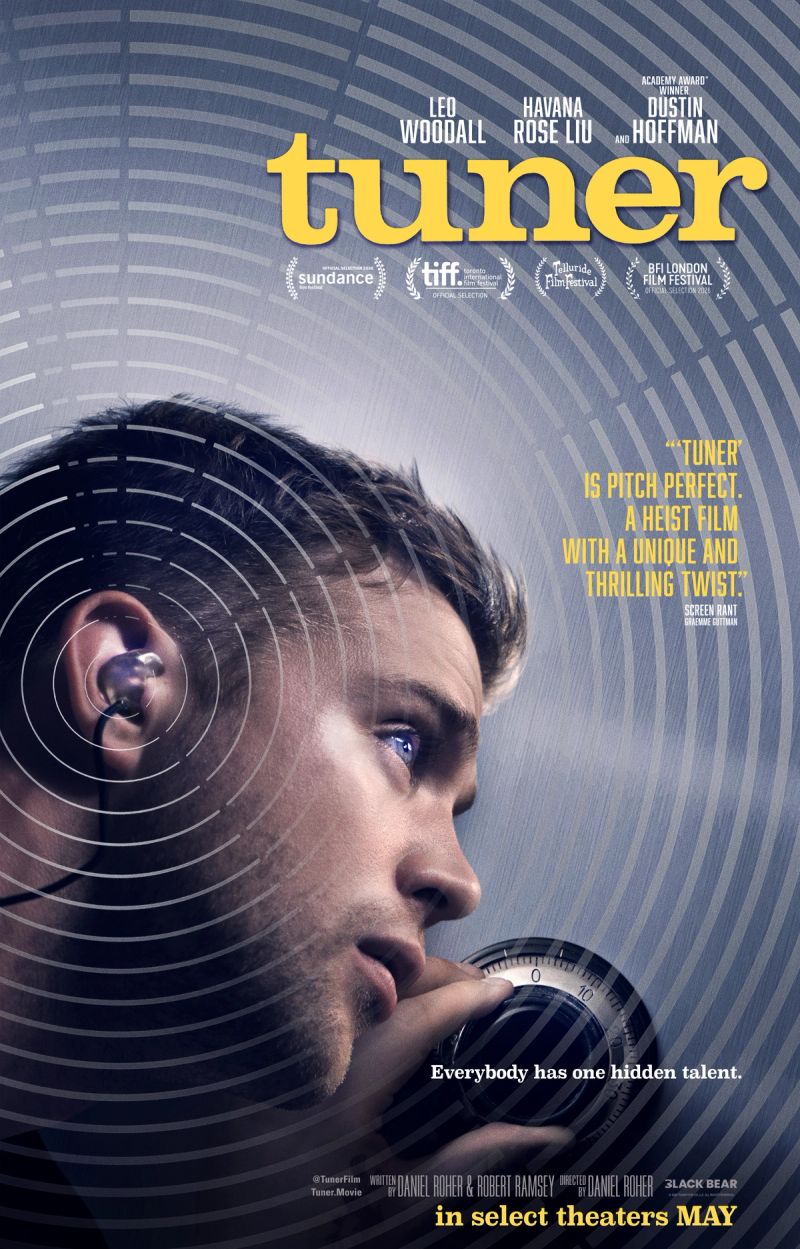
A gifted former piano prodigy discovers that his extraordinary sensitivity to sound makes him uniquely skilled at cracking safes, drawing him into a dangerous criminal underworld.
I put this on for Dustin Hoffman. He is getting up there, I am working through the ones I have not seen, and then the film goes and kills him in it.
First time through I liked the concept enough to know I would come back to it. A piano tuner with hyperacusis who can hear a safe give is a good premise, and it is doing something most heist films cannot be bothered with, which is building the hero's skill out of a real condition instead of a training montage. Five out of five, and I moved on.
Nine days later I watched it again. The second pass is the only reason I know what this film is actually doing.
There is some pretty good character establishment here for the main characters' backstories. What drives them, what creates the connections with the people around them, and why they were involved with those people at all. That is more work than this genre usually bothers to do, and it is the reason the back half lands.
The sound department did a really good job of localizing the actual effect of what it would feel like if the viewer also had hyperacusis. Most of the film runs at low volume or has no background at all, just natural ambient, which I generally enjoy, as it lets you really get into the scene and hear shit most movies block out with bullshit score.
They did not try to add anything unnecessary and they did not try to take anything away either. As somebody with very particular auditory things of my own, I appreciated the sound on this one immensely.
Hoffman dies, and the kid has to give in to his own demons about cracking safes. He sells it completely. You watch the entire internal struggle over whether he should do it to help the widow, the whole going-through-the-options-list, before he finally says fuck it and calls the Uri Trio.
The Uri Trio gets the full stereotype on the way in. Thick chains, matching jogging suits, pinky rings, always into something. I have seen a lot of these types of groups in my travels, always recognizable and "yeah I see you" on sight, lol.
Whether that is observation or shorthand depends on whether anybody in the film gets to dress that way and not be a criminal.
Then you get to the doors, and both keypads play Hava Nagila on their key tones. The outer door plays the first part, the inner door plays the second, so the melody only completes if you get through both of them.
I missed it the first time. I heard the tones. I was not paying enough attention to actually hear them, which is a different thing entirely.
That is not a gag, that is design, and it is the kind that never announces itself. A film about a man who navigates by ear uses sound to mark how deep into a building you are, and not one line of dialogue points at it. The Hava Nagila underneath it is either somebody in the sound department enjoying themselves or Uri having put it there himself, and the film gives you grounds for the second one: he runs the security company that installed the locks he is robbing. Nobody explains it either way.
Structurally it does not stray far. Mentor and apprentice, one last job, a crew you cannot trust, a specialist whose gift is also his wound. The reviews that disliked it said exactly that and stopped there.
What they missed is that the borrowed frame is carrying something the genre usually will not touch, and that the two best ideas in the picture, the split melody and the trade at the end, do not appear in any published review I can find.
All the shit he went through to get that watch back left him mostly deaf, maybe fully deaf.
He gave up playing in the first place because of his hyperacusis. Playing was simply too loud to survive, which is about the cruelest reason a man like that could have for stopping. So the last thing the film has him do is bang the fuck out of the keys and play so beautifully and so perfectly that it lands somewhere near transcendent.
He cannot tune anymore. He can finally play again. The injury removed the exact condition that was stopping him, which makes this an honest trade with a price on it instead of a tragedy wearing a hopeful face.
He also keeps telling people he cannot hear and still knows the E flat is out, so either he is not fully deaf or he is feeling it in the keys. Beethoven did the second one. He kept composing by vibration long after conversation was gone, biting a rod attached to the piano so the pitch came through his jaw. Deaf to speech, not deaf to the instrument. That is where this film lands, and it is smart enough not to say the name out loud.
Overall ●●●●●
Five on the first watch and it held on the second, which almost nothing does. Better the second time, because that is when the work shows.
Who made it
All posters, stills and promotional images on this site are the property of their respective copyright holders and are reproduced or linked here for the purpose of commentary and analysis. No ownership is claimed and no affiliation or endorsement is implied. Rights holders who want an image removed can say so and it comes down. Remove my shit, please[email protected]